
Today, 27 January, marks Holocaust Remembrance Day, established in memory of one of the darkest chapters in our history: the death of six million Jews and of all those considered “inferior” — Roma people, homosexuals, political opponents, prisoners of war and others — by the Nazi-Fascist regime.
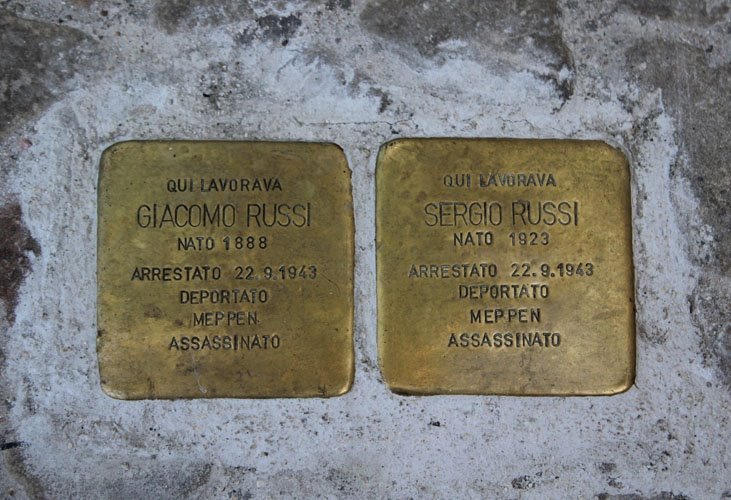
The city of Ancona, home to one of the most important Jewish communities in Europe, saw many of its citizens forced from their homes and deported to extermination camps. Numerous initiatives have been promoted over the years to ensure these events are not forgotten; among the most significant are the Stolpersteine (Stumbling Stones), small urban memorials created to honour the victims of this massacre.
The project was launched by German artist Gunter Demnig, who has laid more than 71,000 Stumbling Stones across Europe, including several in Italy and in Ancona itself.
Today, the Municipality of Ancona has organised meeting points at some of these Stumbling Stones, from 8:30 a.m. to 1:15 p.m. Below are the locations:
-
Corso Amendola, 51 (Ferruccio Ascoli – Giacomo Russi – Sergio Russi)
-
Via Astagno, 10 (Eugenia Carcassoni – Guido Lowenthal)
-
Via Astagno, 18 (Dante Coen – Romilde Coen – Umberto Coen)
-
Corso Garibaldi, 28 (Enrica Coen – Mosè Coen)
-
Via della Loggia, 1 (Franco Coen Beninfante – Lucio Coen Beninfante – Renzo Coen Beninfante)
-
Via Santa Margherita, 5 (Achille Guglielmi – Gino Guglielmi – Elsa Zamorani)
-
Piazza Cavour, 10 (Andrea Lorenzetti)
-
Via Goito, 2 (Nella Montefiori)
-
Via delle Fornaci Comunali, 9 (Vittoria Nenni)
-
Via Bernabei, 12 (Alberto Pacifici)
-
Corso Garibaldi, 19 (Piero Sonnino)
-
Piazza del Plebiscito, 40/41 (Dante Sturbini)
-
Via Isonzo, 146 (Gino Tommasi)
-
Via Volturno, 2 (Bruno Cagli)
-
Corso Garibaldi, 40 (Clara Sereno)
-
Corso Carlo Alberto (Alvaro Pietrucci)
-
Torrette (Lamberto Morbidelli)
For today only, the Synagogue of Ancona will reopen to the public, offering free guided tours until 5:30 p.m.
Holocaust Remembrance Day is not meant only to recall one of the most horrific genocides in history, but also to remind us that it originated from human cruelty — the same cruelty that still affects millions of innocent people today.